
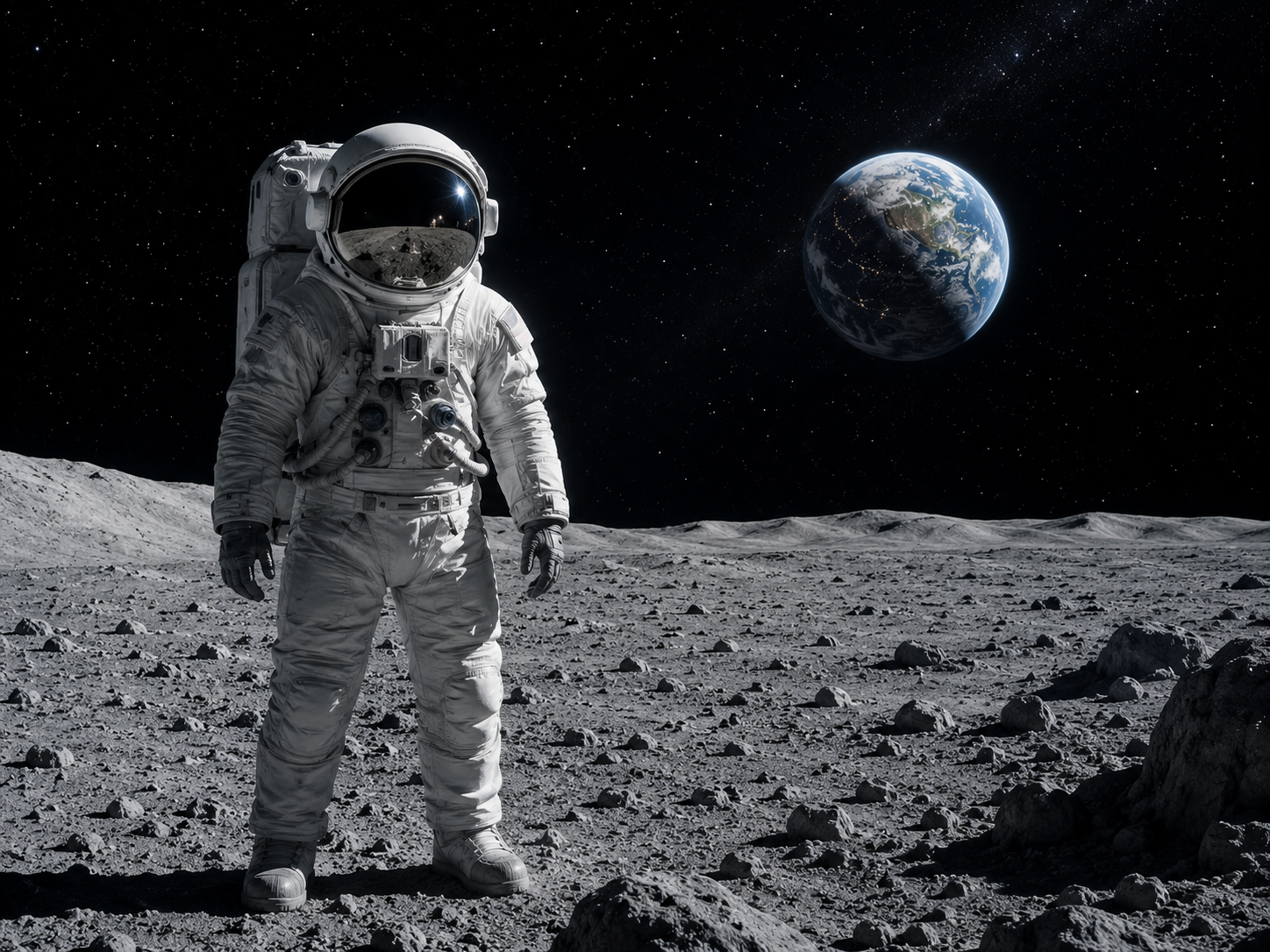
Walking on the Moon is an experience only 12 people have ever had. The lunar environment presents unique challenges that human bodies must adapt to survive. From reduced gravity to extreme temperatures, the Moon is both fascinating and hostile to human life.
The Gravity Experience
The most obvious difference is gravity. The Moon's gravity is only one-sixth that of Earth's. This means that if you weigh 70 kg on Earth, you would feel like you weigh only about 11.5 kg on the Moon. This dramatic reduction has profound effects on how your body moves and functions.
This reduced gravity would make walking feel like bouncing. Apollo astronauts developed a loping gait to move efficiently, taking longer strides and using the reduced gravity to their advantage. Simple movements become effortless, but precise control requires practice and adaptation.
The Lunar Dust Problem
The lunar surface is covered in fine, abrasive dust called regolith. This dust clings to everything and can be hazardous to both equipment and lungs if inhaled. The dust is sharp and electrostatically charged, making it difficult to clean and potentially damaging to spacecraft systems.
Apollo astronauts reported that lunar dust smelled like gunpowder when they returned to their lunar module and removed their helmets. The dust can cause mechanical failures, clog filters, and pose health risks if inhaled over extended periods.
Extreme Temperature Swings
Temperature extremes are another challenge. The Moon has no atmosphere to regulate temperature, so it can swing from -173°C at night to 127°C during the day in the equatorial regions. These temperature variations occur over the course of a lunar day, which lasts about 29 Earth days.
Without atmospheric protection, astronauts must rely entirely on their spacesuits for thermal regulation. The suits must maintain a comfortable temperature despite these extreme external conditions, requiring sophisticated thermal control systems.
Future Lunar Exploration
Despite these challenges, the Moon remains a primary target for future human exploration. Plans for lunar bases and extended stays are being developed by space agencies around the world. These missions will need to address the challenges of lunar dust, radiation, and resource utilization.
The Moon may serve as a stepping stone for deeper space exploration, providing a platform to test technologies and strategies for missions to Mars and beyond. Our closest celestial neighbor still holds many secrets waiting to be discovered.