
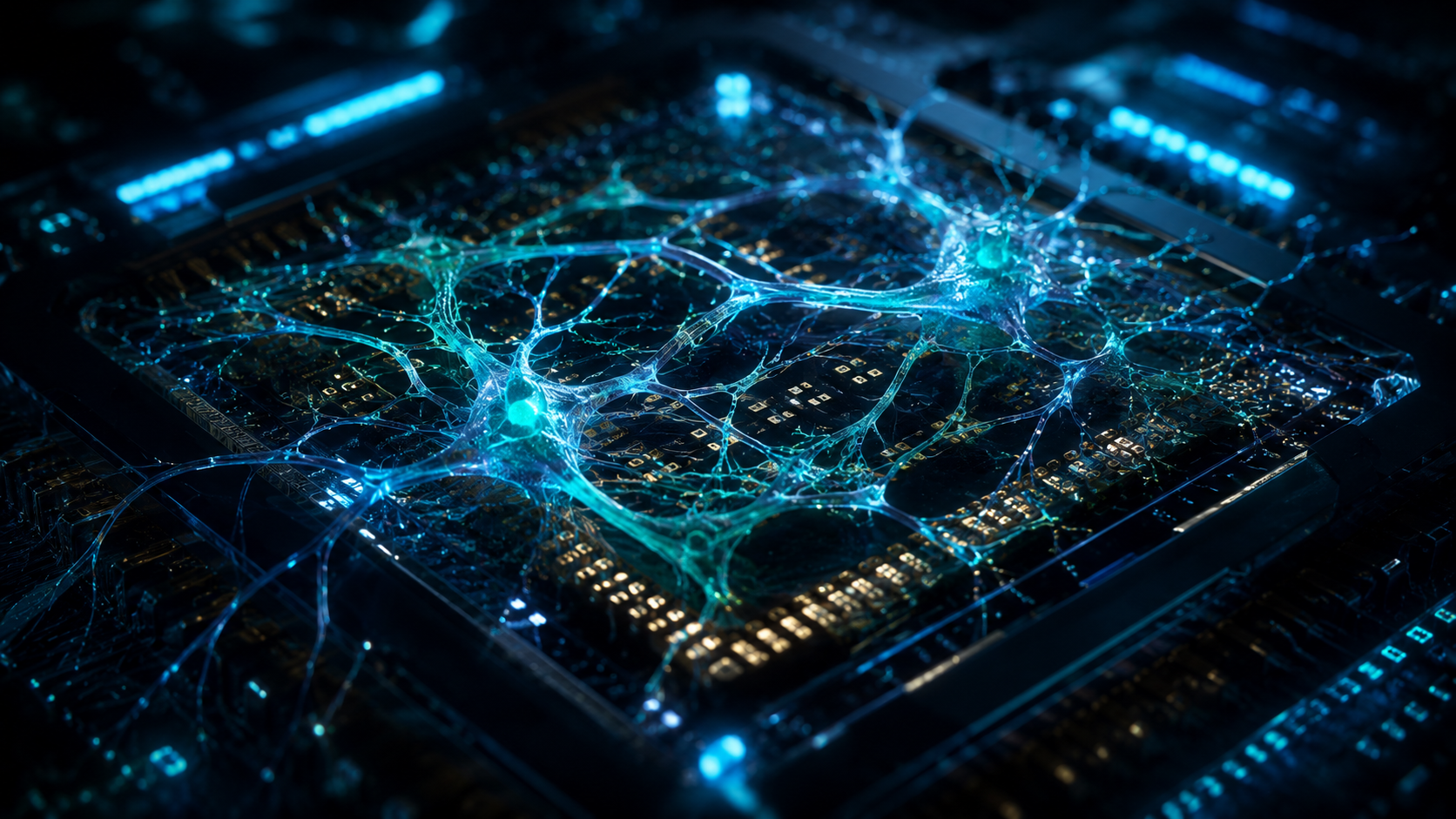
For decades, computer engineers have looked to the human brain as the ultimate inspiration for artificial intelligence. But now, biotech pioneers are skipping the simulation entirely. Instead of building silicon hardware that mimics the brain, scientists at Cortical Labs and Johns Hopkins University are cultivating actual living human brain cells on microchips to process information.
The DishBrain Breakthrough
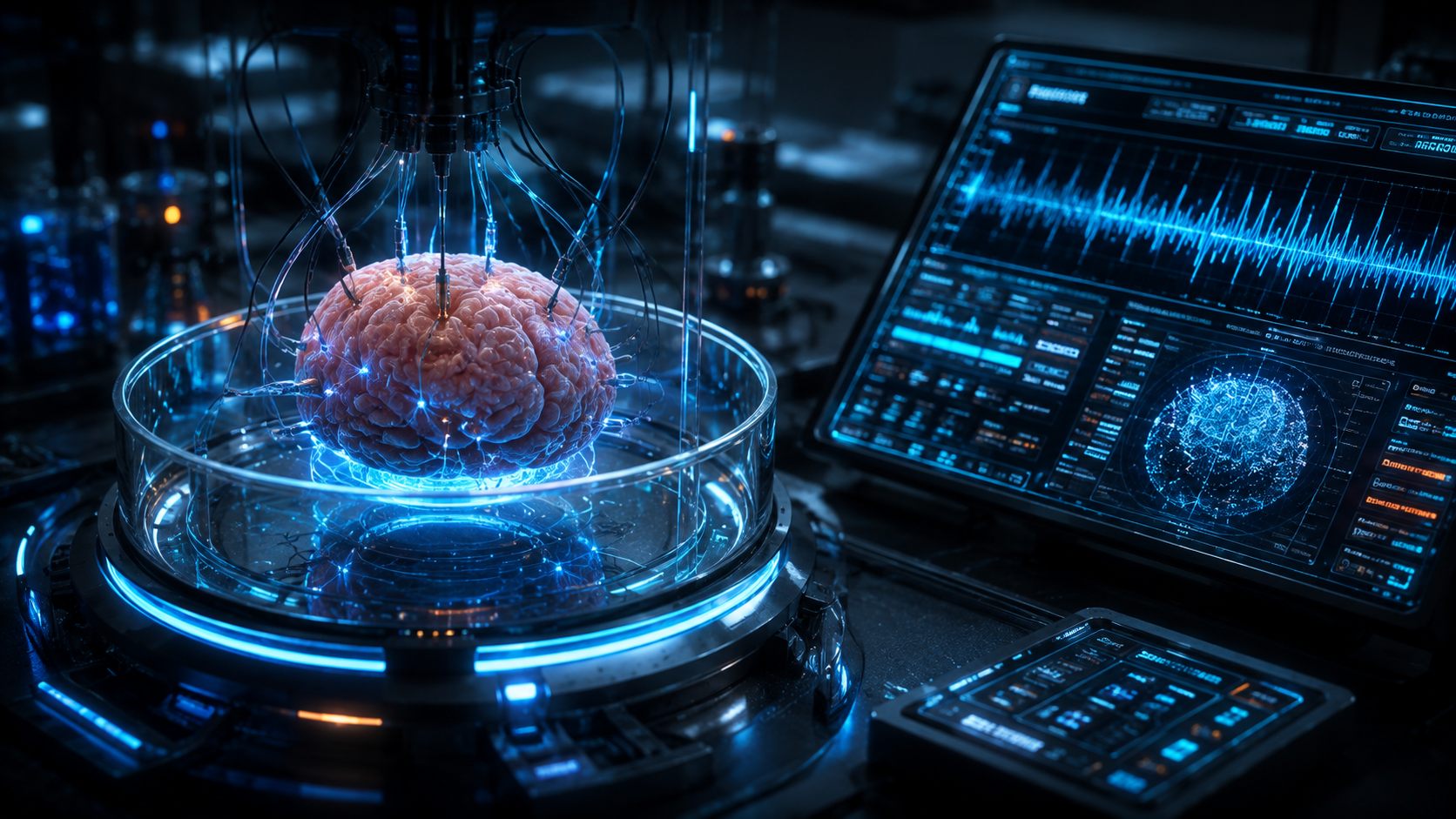
In a groundbreaking study published in the peer-reviewed scientific journal Neuron, researchers created a system called "DishBrain." They placed approximately 800,000 living brain cells—derived from human stem cells—onto a specialized silicon chip fitted with thousands of micro-electrodes.
These electrodes allow computer chips to communicate directly with the neurons using electrical impulses. The computer sends signals to the cells to describe a digital environment, and reads electrical pulses sent back by the brain cells to take action.
To test if this living bio-processor could actually learn, scientists connected DishBrain to the classic arcade game Pong. Within just five minutes, the living cells learned how to move the digital paddle to hit the ball back and forth.
How Does Living Tissue Learn Games?
How can a collection of cells without eyes, ears, or a body learn to play a video game?
The Simple Example: Predictable vs. Static Radio Noise
Imagine sitting in a dark room with headphones. If someone plays loud, unpredictable static noise, it feels uncomfortable and chaotic. But if they play a steady, predictable musical beat, your brain feels relaxed. Neurons behave the exact same way—they naturally organize themselves to reduce unpredictable electrical chaos.
When the DishBrain paddle hit the ball, scientists rewarded the cells with a clear, predictable electrical frequency. When the paddle missed, they zapped the cells with chaotic, random electrical noise. To avoid the annoying electrical static, the neurons rewired their own physical connections to hit the ball more often!
Why Biology Beats Silicon
This new field, dubbed **Organoid Intelligence (OI)**, could revolutionize computing. Modern AI supercomputers require megawatts of electricity—enough to power entire small towns—and generate massive amounts of heat.
In contrast, the human brain operates on just **20 watts of power**—barely enough to light up a single weak nightlight—while performing calculations that no digital supercomputer can match. Biocomputers could run advanced AI models on a tiny fraction of the energy consumed by silicon chips today.
Scientific References & Sources
- Neuron Journal (Cell Press): In vitro neurons learn and exhibit sentience when embodied in a simulated game-world (DishBrain Paper).
- Johns Hopkins University / Frontiers in Science: Organoid intelligence (OI): The new frontier in biocomputing.
- MIT Technology Review: Human brain cells grown in a dish learned to play Pong.