
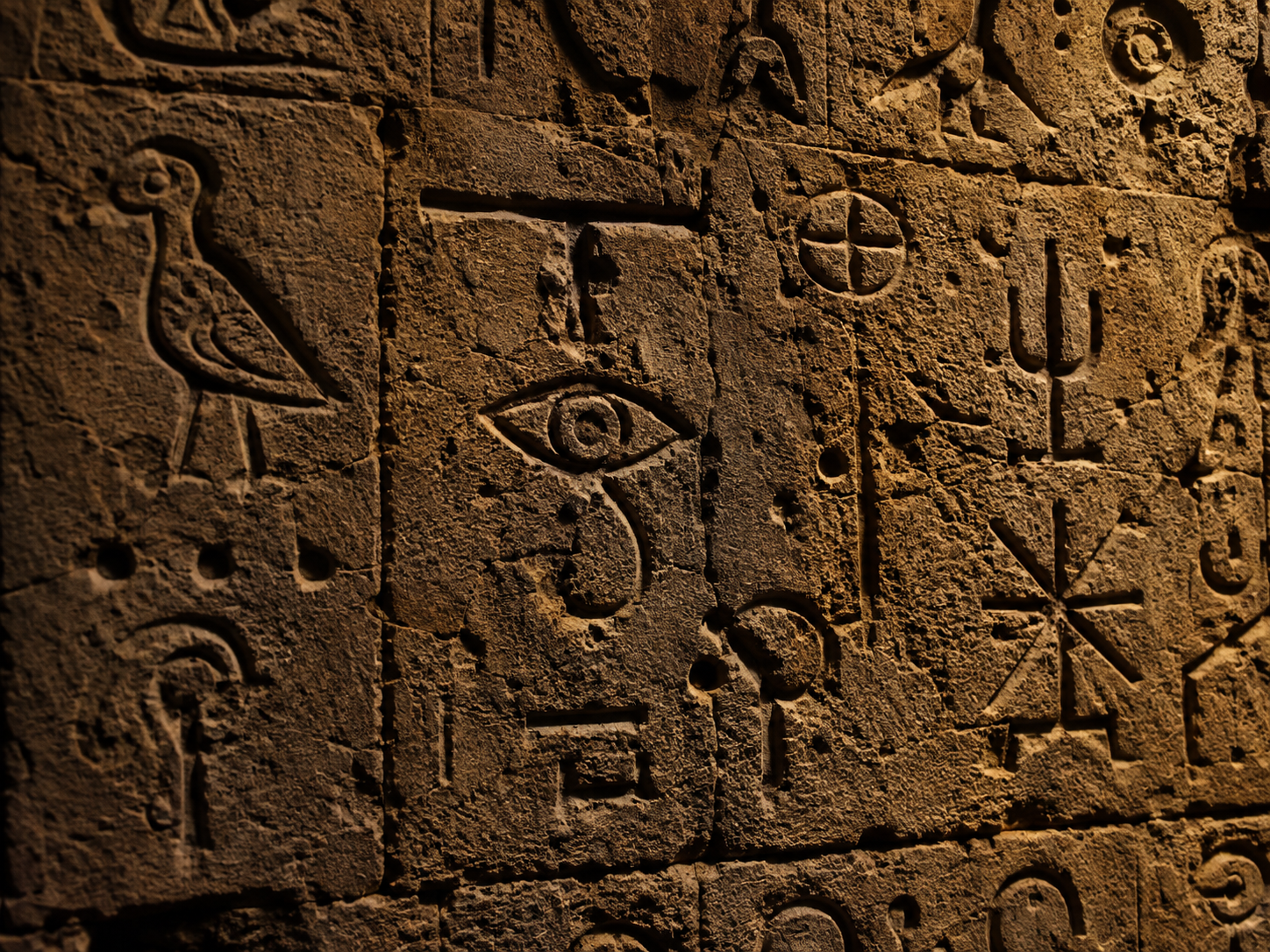
Writing is one of humanity's most important inventions. It allowed us to record knowledge, communicate across time and space, and build complex civilizations. The development of writing systems represents a fundamental shift in human capability, marking the boundary between prehistory and history.
The Birth of Cuneiform
The earliest known writing system emerged in Mesopotamia around 3200 BCE. Called cuneiform, it used wedge-shaped marks pressed into clay tablets. This system was developed by the Sumerians to keep track of trade and administrative records—originally a practical tool for an increasingly complex society.
Over time, cuneiform evolved from simple pictographs to represent sounds and ideas. It was used to write multiple languages, including Sumerian, Akkadian, and Hittite, and remained in use for over 3,000 years. The tablets that survive today give us unprecedented insight into ancient civilizations.
Independent Inventions
Writing independently developed in other regions as well. The Chinese developed their character-based writing system around 1200 BCE, while the ancient Egyptians created hieroglyphics for both religious and administrative purposes. Each system emerged from different cultural needs and contexts.
The Mesoamerican civilizations developed their own writing systems, including Maya hieroglyphics, which combined logographic and syllabic elements. These independent inventions suggest that writing was a natural development as societies grew more complex.
The Alphabet Revolution
The invention of the alphabet around 1800 BCE in the Levant revolutionized writing. Unlike syllabic or logographic systems, alphabets used a small set of symbols to represent individual sounds, making literacy more accessible. This democratization of literacy had profound social and political implications.
The Phoenician alphabet spread throughout the Mediterranean, evolving into Greek, Latin, and eventually the alphabets we use today. This lineage shows how cultural and technological innovations spread and adapt across civilizations.
The Digital Age
Today, we're experiencing another revolution in writing and communication. Digital technologies have transformed how we create, share, and preserve written content. The internet has made knowledge more accessible than ever before, while new forms of writing and communication continue to emerge.
From ancient clay tablets to digital screens, the fundamental human need to communicate and preserve knowledge remains constant. Each technological advance builds on the foundations laid by our ancestors, continuing the long journey of human communication that began with those first marks on clay.